 StayScout
Rents in Amsterdam range from around €1,350 a month for a studio in an outer district to well over €3,000 for a one-bedroom on the canal ring, according to recent Amsterdam rent data and 2026 neighbourhood pricing. The neighbourhood you pick will shape your budget, your commute, and how the city feels day to day far more than the specific listing you end up in.
This map shows what each part of the city typically costs, and the guide below explains what each area is like and who it suits. It covers students, expats, digital nomads and young professionals, so you can compare everything in one place before you start searching for housing for rent in Amsterdam.
Amsterdam rent map
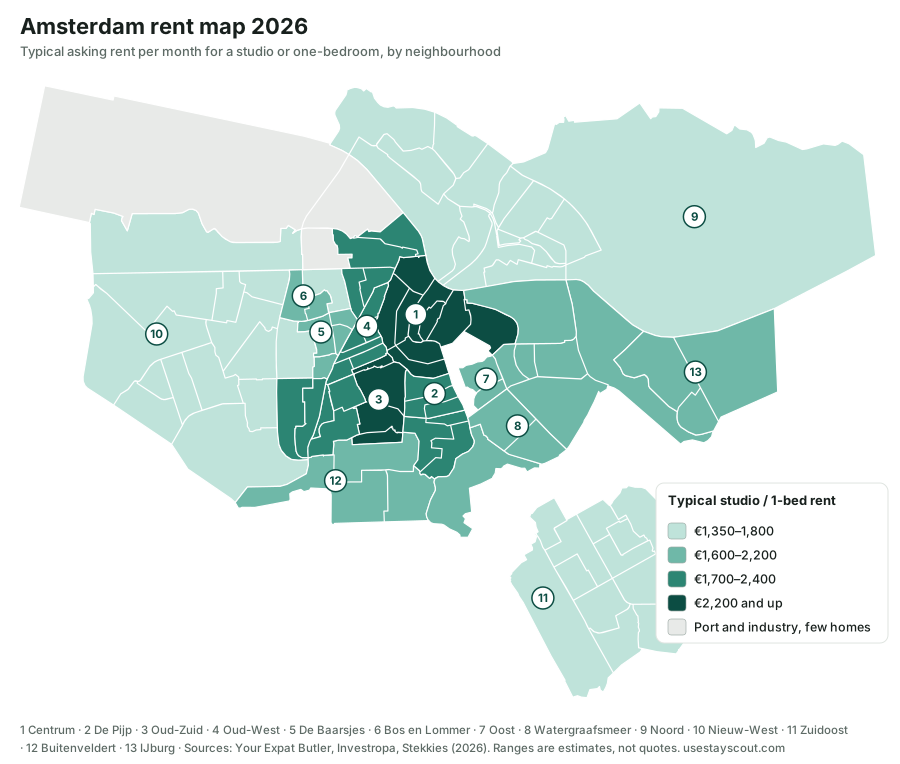
Darker areas cost more. The ranges are typical asking rents for a studio or one-bedroom, drawn from the 2026 sources linked above. Actual prices depend on size, condition, and whether a home falls under regulated or free-sector rent, so treat them as a starting point rather than a quote. The neighbourhood shapes are the same areas you can choose when you set up a search in StayScout.
You may already know Hoodmaps Amsterdam, the crowdsourced map that labels areas by reputation ("tourists", "hipsters", "rich"). It's a fun way to get a feel for the city, but it doesn't tell you what anything costs. This map is meant to sit next to it: use Hoodmaps for the vibe and this one for the budget.
Amsterdam neighbourhoods compared
The numbers match the markers on the map.
| # | Neighbourhood | Vibe | Studio / 1-bed rent | Best for |
|---|---|---|---|---|
| 1 | Centrum (incl. Jordaan and Canal Belt) | Historic, postcard Amsterdam | €2,200–€3,500 | Established expats, longer stays |
| 2 | De Pijp | Busy, market-lined, social | €1,700–€2,400 | Young professionals and students who want nightlife |
| 3 | Oud-Zuid and Zuidas | Polished, quiet, business district | €2,500–€3,800 | Corporate relocations, families |
| 4 | Oud-West | Leafy, near Vondelpark | €1,700–€2,400 | Young professionals and small families |
| 5 | De Baarsjes | Diverse, gentrifying, good value | €1,600–€2,100 | First-time expats on a tighter budget |
| 6 | Bos en Lommer | Diverse, up-and-coming | €1,600–€2,100 | Value hunters close to the centre |
| 7 | Oost | Multicultural, near Science Park | €1,700–€2,400 | Students, remote workers, young professionals |
| 8 | Watergraafsmeer | Green, residential | €1,700–€2,300 | Science Park students, couples |
| 9 | Noord | Creative, industrial, spacious | €1,350–€1,800 | Budget renters, digital nomads |
| 10 | Nieuw-West | Residential, lots of green | €1,350–€1,800 | Renters who want space for less |
| 11 | Zuidoost (incl. Bijlmer) | Very diverse, good metro links | €1,350–€1,800 | The tightest budgets |
| 12 | Buitenveldert | Quiet, next to VU and Zuidas | €1,700–€2,200 | VU students, people working in Zuidas |
| 13 | IJburg | New-build, waterside | €1,700–€2,200 | Families, people who want modern homes |
A room in a shared house costs less than a studio in the same area. Students typically pay around €600–€800 in Zuidoost, €700–€950 in Noord and Oost, and €900–€1,200 in De Pijp or near the campuses. The citywide average for a student room is about €990 a month, according to Kamernet data reported by NL Times.
What to weigh before picking an area
Three things tend to matter most, in roughly this order. First, budget, because the price gap between the centre and the outer ring is large. Second, commute: the city is compact, but a ring-road crossing or a ferry can add real time. Third, the kind of neighbourhood you want to come home to, whether that's quiet and residential or busy with cafés and markets. Decide on these before you start filtering listings, because a beautiful apartment in the wrong area for your daily routine gets old fast.
The central neighbourhoods
1. Centrum, Jordaan and the Canal Belt
The Jordaan and the Canal Belt (Grachtengordel) are what most people picture when they think of Amsterdam: narrow streets, canal houses, and a quieter, more established feel than De Pijp. They're also among the most expensive parts of the city to rent in. They tend to suit renters who've already settled into Amsterdam life and want to stay somewhere they won't want to leave. Students rarely live here unless they find a room through the UvA, whose Roeterseiland campus sits on the eastern edge of the centre.
2. De Pijp
De Pijp is Amsterdam's most talked-about neighbourhood for young professionals and students who want nightlife on their doorstep: the Albert Cuyp market, a dense concentration of restaurants and bars, and a short cycle to the centre. It's compact and lively rather than quiet. Competition for rooms is fierce, and prices are higher than in most other areas.
3. Oud-Zuid and Zuidas
Oud-Zuid, and the Zuidas business district south of it, is where many corporate relocations end up: international schools, a direct rail connection to Schiphol, and a polished, quieter feel than the neighbourhoods closer to the centre. Rents here run at the top of the city's range. It suits renters, often with families or with an employer covering part of the cost, who prioritise ease and predictability over character.
4. Oud-West
Oud-West sits between the Jordaan and Vondelpark and offers a bit of both: leafy, walkable and close to the park, with its own strip of cafés and independent shops along Kinkerstraat and De Clercqstraat. It's a common landing spot for expats and young families who want central-adjacent living without Jordaan prices.
West: better value close to the centre
5. De Baarsjes and 6. Bos en Lommer
West of the centre, De Baarsjes and Bos en Lommer have gentrified steadily over the past decade while still costing less than De Pijp or Oud-West. They're diverse, increasingly well served by cafés and shops, and a common first stop for expats and digital nomads who want a manageable budget without moving to the edge of the city.
10. Nieuw-West
Nieuw-West is further out and more residential, with lots of parks and the Sloterplas lake. Areas such as Slotermeer and Osdorp are among the few places in the city where studios still come in under €1,500. The trade-off is a longer cycle or tram ride to the centre.
East: students, Science Park and new-build
7. Oost and 8. Watergraafsmeer
Amsterdam Oost has become one of the city's most popular areas for a mixed crowd: students, young professionals and remote workers. It costs less than De Pijp or Oud-West for a comparable size, and areas like the Indische Buurt and Oosterpark have a diverse, unpolished feel that many renters prefer. Watergraafsmeer, just south-east, is greener and quieter and sits right next to Science Park, which makes it a practical choice for UvA science students.
13. IJburg
IJburg is a newer district built on islands in the IJmeer, with modern apartments, beaches and a tram straight to Centraal Station. It's popular with families and with anyone who wants a newer home, but it's quiet in the evenings and a longer trip from the centre than most of Oost.
North and South-East: the most space for your money
9. Noord
Amsterdam Noord, across the IJ river, offers noticeably more space for your money than almost anywhere else in the city, along with a creative, ex-industrial identity around the NDSM wharf. Getting to the centre means a free ferry (about five minutes) or the North/South metro line. Both are reliable, but they add a step compared to cycling from Oud-West. If you work remotely or study from home a lot, that trade-off often works in your favour.
11. Zuidoost and the Bijlmer
Zuidoost, including the Bijlmer, has some of the cheapest rooms in the city, a very diverse community, and fast metro connections to the centre and Zuid. It's further out, but students on a tight budget often find it the most realistic option. Several large student complexes, such as OurDomain, are located here.
12. Buitenveldert
Buitenveldert is a quiet residential area right next to VU Amsterdam and the Zuidas. It isn't lively, but if you study at VU you can walk or cycle to class in minutes, and rooms here go quickly for that reason.
Living near your university
If convenience is your top priority, look at the areas closest to campus:
- UvA Roeterseiland and city centre buildings: Centrum, Plantage and Oost
- UvA Science Park: Watergraafsmeer and Oost
- VU Amsterdam: Buitenveldert, Zuidas and Amstelveen
Rooms near campus are limited and fill fast, so be ready to move quickly when one appears. Our guide to student housing in Amsterdam covers university housing, providers and prices in detail.
Towns near Amsterdam to consider
Because the housing shortage in Amsterdam is so severe, many students and young professionals live just outside the city. These towns are well connected by train, metro or bike, and usually cost less:
- Amstelveen: green and calm, popular with expats, and right next to VU Amsterdam
- Diemen: a student-friendly town next to Amsterdam with many shared apartments and student complexes, about 10 minutes by train or bike to the city
- Zaandam: cheaper housing and around 15 minutes by train to Amsterdam Centraal
- Haarlem: a historic city 15–20 minutes by train, with a more relaxed feel and slightly higher rents than Zaandam
- Almere: a modern city about 30 minutes by train, with plenty of new housing
Competing for a listing once you've picked an area
Whichever neighbourhood you choose, the practical challenge is the same. Popular listings in Amsterdam can attract dozens of responses in the first hour, so seeing a new listing early matters as much as picking the right area. Instead of scrolling Pararius, Kamernet, Funda and a dozen Facebook groups every day, you can set up Amsterdam rental alerts for the neighbourhoods on your shortlist. StayScout checks all of those sources for you and notifies you the moment a matching listing appears, so you can apply before the viewing slots are full. If you're after a smaller, self-contained place, which is common in Noord or De Baarsjes, our studios for rent in Amsterdam are a good place to start.
Be careful with listings that look too good for the area. Rent far below the ranges on the map, especially in De Pijp or the Jordaan, is one of the most reliable signs of a scam. Our guide to Amsterdam rental scams covers the red flags to check before you send any money.
FAQs about Amsterdam neighbourhoods
Q1: What is the best neighbourhood in Amsterdam to live in? It depends on what you're prioritising. De Pijp and Oud-West suit renters who want a lively, central area at a mid-range price. Oud-Zuid suits corporate relocations and families who want ease over character. Noord, Nieuw-West and Zuidoost suit anyone prioritising space and budget over a short commute.
Q2: Which Amsterdam neighbourhood is the cheapest to rent in? Noord, Nieuw-West and Zuidoost tend to be cheapest for comparable space, with studios generally starting from around €1,350 a month and rooms from around €600–€900. Prices still vary a lot by building, so compare several listings rather than assuming a whole area is cheap.
Q3: Where do most students live in Amsterdam? Mostly in Oost, De Pijp, Noord and Zuidoost, and near the campuses in Watergraafsmeer and Buitenveldert. Many also live in Diemen or Amstelveen, which are cheaper and well connected.
Q4: Is there a map of Amsterdam neighbourhoods by rent? Yes, the map at the top of this page colours each Amsterdam neighbourhood by typical studio or one-bedroom rent in 2026. Hoodmaps Amsterdam is a popular crowdsourced map too, but it shows reputation rather than prices.
Q5: How much does it cost to rent a one-bedroom apartment in Amsterdam? Citywide, a one-bedroom typically runs from around €1,700 to €2,300 a month. It can go well beyond that in the Jordaan, Canal Belt or Oud-Zuid, and stay closer to the lower end in Noord or Bos en Lommer.
Q6: Is Amsterdam Noord a good place to live? Many renters find it one of the best-value areas in the city, with more space for the money and a creative identity around the NDSM wharf. The main consideration is the commute, since reaching the centre means a ferry or the metro rather than a short cycle.
Conclusion
Amsterdam doesn't have one best neighbourhood. It has a best neighbourhood for your budget, your commute and the kind of street you want to live on. Use the map to see what you can afford, the table to compare areas, and then narrow your shortlist down to two or three. Once you have it, set up alerts for Amsterdam for those areas, so new listings come to you as soon as they go live and you can reply first.